

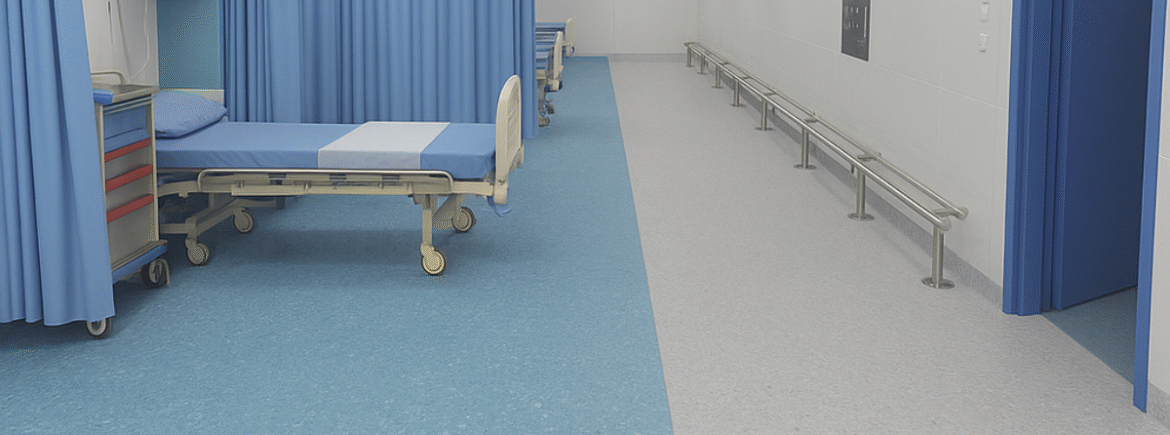
ICU Room Finishing According to the Highest Standards of Safety and Infection Control
Intensive Care Units (ICUs) represent the most sensitive and high-risk areas in any hospital — where every detail can impact patient safety and recovery.
Designing and finishing these rooms require materials that not only meet functional needs but also guarantee long-term hygiene, safety, and easy maintenance.
In line with Saudi Vision 2030 and CBAHI accreditation standards, healthcare projects today are increasingly adopting advanced surface systems that provide infection control, electrical safety, and durability under constant sterilization.
At Nwabeg Al Motawaset, we specialize in integrated finishing systems designed specifically for critical medical environments, combining technology, safety, and practicality.
1. Electrical Safety Starts from the Floor
In ICUs, continuous use of electrical medical equipment — from ventilators to monitoring devices — makes electrostatic discharge (ESD) a real safety concern.
That’s why conductive and antistatic vinyl flooring has become the standard choice.
These advanced floors are engineered to safely discharge static electricity, preventing potential harm to both patients and sensitive medical devices.
✅ Key Features:
-
Conductive or antistatic surface that disperses electric charges safely.
-
Seamless installation with welded joints for a fully sealed surface.
-
Resistant to chemicals, disinfectants, and intensive cleaning.
-
Hygienic and easy to maintain, ensuring continuous operational safety.
By combining electrical safety with hygienic performance, vinyl floors from Grabo ensure that every square meter of an ICU contributes to patient protection.
2. Walls that Protect — Not Just Enclose
Beyond aesthetics, the wall system plays a crucial role in infection control.
PVC wall cladding like Saniclad offers a smooth, antimicrobial surface that prevents bacterial growth and withstands constant disinfection.
✅ Why Saniclad is Ideal for ICUs:
-
Antimicrobial technology based on silver ions, providing continuous protection.
-
Seamless and joint-free installation using welding or thermoformed corners to eliminate dust and microbial buildup.
-
Certified for fire resistance, chemical durability, and bacterial resistance.
-
Fully compliant with CBAHI and Ministry of Health specifications for critical zones.
These features make Saniclad a perfect solution for ICUs, operating theaters, isolation rooms, and all areas requiring maximum hygiene.
3. Integration Between Walls, Ceilings, and Floors
True hygienic design means treating every surface as one continuous system.
Through precise detailing — such as vinyl coving, J-sections ,H-sections and thermoformed corners — the connection between walls, ceilings, and floors becomes completely sealed, ensuring no bacteria or dirt can accumulate.
This level of precision not only enhances hygiene but also simplifies cleaning, making it easier for healthcare teams to maintain sterile conditions 24/7.
4. Aligned with Vision 2030 and CBAHI Standards
Saudi Arabia’s Vision 2030 emphasizes world-class healthcare infrastructure built on efficiency, safety, and patient-centered design.
By using specialized hygienic finishing systems, hospitals can meet CBAHI’s infection control and environmental safety requirements — ensuring readiness for international accreditation and sustainable operation.
Designing an ideal ICU is not only about medical technology — it’s about creating a safe, clean, and efficient environment that supports both patients and medical staff.
At Nwabeg Al Motawaset, we combine our expertise in antistatic vinyl flooring and antimicrobial PVC wall cladding to deliver complete finishing systems that meet the highest global standards.
Our mission is simple: to build environments that protect lives — from the ground up to the ceiling.